Wednesday January 25 2012 8:00AM- 9:45AM | Washington Hilton
Presiding Officer: Nelson, David O. - Jacobs Engineering Group Inc.
Sponsored By: Commuter Rail Transport Committee AP070
The last decade’s rapid advancements in computer and communications technologies have opened whole new ways for commuter railroads to communicate with and serve their customers. I-phones, androids, smart cards, Facebook, and Twitter all now have an emerging role in commuter rail service delivery. The session sampled how various commuter railroads across the country are employing new technology to improve the efficiency and effectiveness of their customer service and business processes.
Technological Innovation on Boston's Commuter Rail Network (P12-5563)
Boston's MBTA has recently reclaimed its leadership in application of computer technology to improving transit service delivery for its bus, rapid transit and commuter rail customers Joshua Robin, the MBTA's director of innovation will describe three recent technological innovations that have been applied to the T's commuter rail network. Virtually all commuter rail customers enjoy free wifi service on MBTA trains. Passengers parking at most commuter rail parking lots can now pay for their daily parking using their cell phone after they've already boarded the train. Third party innovators are starting to use MBTA train movement data to communicate the progress and identify delays on the commuter rail network as they are already doing for MBTA bus customers.
Presenter: Robin, Joshua K, Massachusetts Bay Transportation Authority
Challenges and Triumphs of Launching a Smartcard Program for a Commuter Rail System (P12-5564)
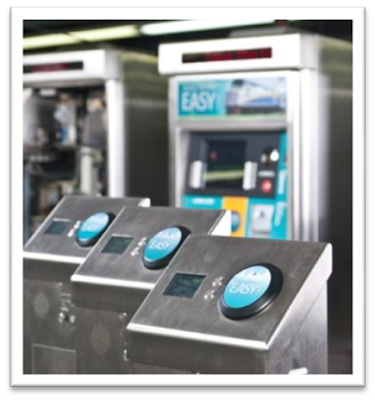
Reloadable stored value cards are becoming more and more common on local bus and rail transit systems. They pose more challenges for the distance based fares charged by commuter railroads. Rene Matthews and Brad Barkman of Miami's Tri Rail system will discuss the scope and challenges presented by implementation of the region's "Easy Card" of the Tri-Rail commuter railroad.
Presenter: Matthews, Renee , South Florida Regional Transit Authority
Social Media, Commuter Rail, and Transit Customer Communication (P12-5565)
As more and more commuters are plugged into the web with Smart Phones, laptops and other devices the role of social media such as Facebook and Twitter in the customer relations process is becoming more salient. Paul O'Brien of the Utah Transit Authority and the FrontRunner will describe Salt Lake's social media program for customer communication.
Presenter: O'Brien, Paul , Utah Transit Authority
Commuter Rail: Balancing Freight Clearance with Level Boarding and ADA Accessibility Requirements (12-1711)
Federal regulators and passenger railways are both concerned about passengers with mobility impairments that limit their abilities to use stairways. Toward that end, federal policy and railway practice strongly encourages developing services that allow for level boarding and alighting from commuter rail trains without using stairways. Beyond benefiting individuals that have trouble using stairs, level boarding can also lead to significant improvements in service delivery for the rest of the public by reducing unproductive station dwell times, improving safety and creating opportunities improve crew efficiency. One principal obstacle to level boarding has been the concerns of freight railroads that operate over (and often own) trackage shared with the passenger trains. The freight operators wish to maintain a full horizontal clearance envelope allowing unrestricted operations. These concerns often limit the close door/platform interface necessary for level boarding. This paper summarizes current FTA policy on level boarding, discusses the benefits of level boarding, reviews the tension between freight clearance concerns and level boarding and reviews the state of the practice in serving passengers with mobility impairments. Based on the industry review, it highlights three innovations that have been implemented or considered to expand the scope of level boarding among North American commuter railroads. Finally it provides recommendations for further research.
Authors: Nelson, David O., Jacobs Engineering Group Inc. | Martinez, Eloy , LTK Engineering Services | Bonina, Stephen , Stadler US, Inc.


 ng Island Rail Road has long hoped to provide diesel multiple-unit (DMU) service to its riders on both the Montauk and Green Branches on the railway's east end. Those hopes now have capital funding identified.

